
Stone Smile 002
"Heroes and Villains" and Major Scale Melodies

The best melody is the major scale. Time and time again I am delighted by the infinite variation and endless surprise contained by that familiar sequence of notes, both ascending and descending. Just the other day in the car, Erin turned on some Beach Boys and BAM! there it is again! Brian Wilson with another swish on “Heroes and Villains.”
“I’ve been in this town so long/that back in the city/I’ve been taken for lost and gone/and unknown for a long long time”
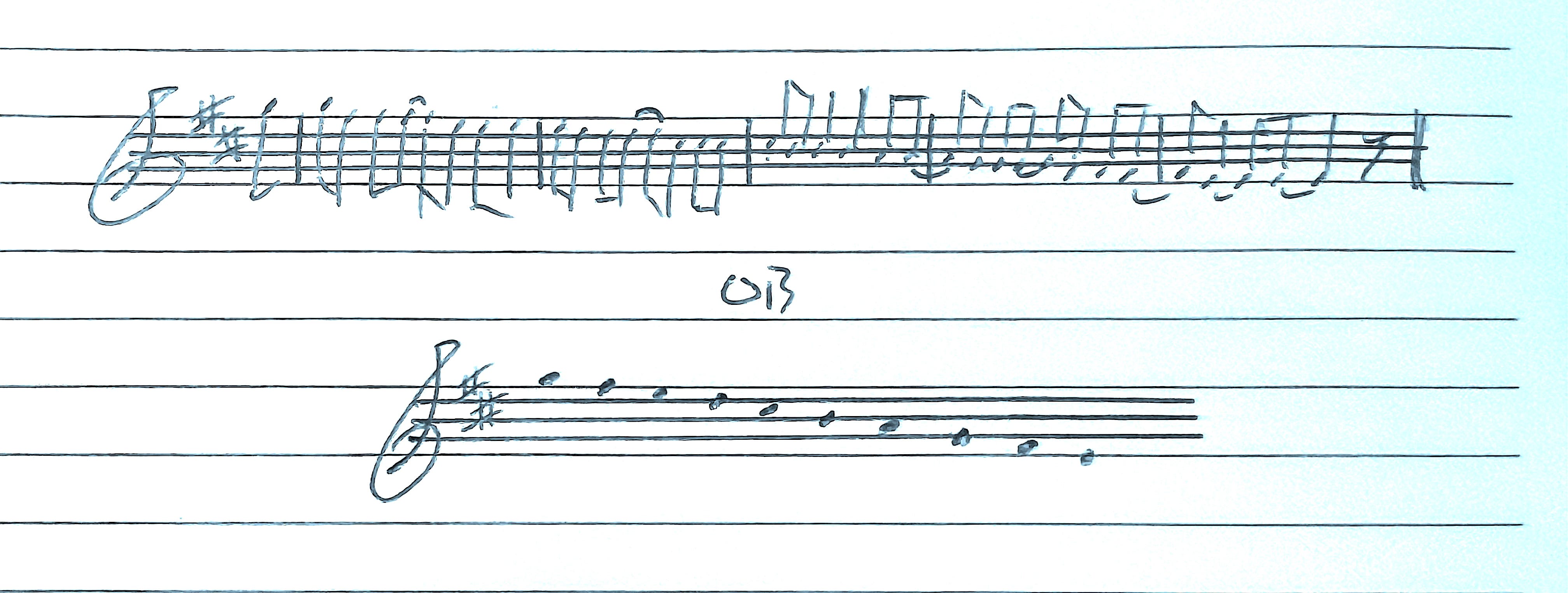
A descending major scale starting on FA and descending a full octave+2 to RE. Most of the time, it’s all on one chord, the I chord, D Major, until the last note of the phrase when it changes to the V chord. No leaps and jumps, no intricate setting, just a major scale on a I chord. The major scale on its own has beautiful and wondrous pushes and pulls. Consider the FA where Wilson starts. FA is a leading tone to MI where we feel kind of at home but not fully then down to RE which is a leading tone to DO, ten down to TI which holds the most tension wanting so badly to go up to DO, but then Wilson takes us down to the LA which suggests the IV chord (FA being the 3rd of IV), then SO where we again feel kind of settled (SO being the 5th of the I chord that’s playing), then down to FA (which an octave up feels like a leading tone to MI but down here later on in the melody feels like a suggestion of a plagal cadence of IV-I down to MI which resolves the implied plagal cadence but, due to the tension building in the song due to the harmonic ostinato on the I, acts mostly as a leading tone of sorts down to RE on which the melody “resolves” to the II7 chord—allowing your ear to feel both satisfied at the chord change after the long buildup and intrigued at the new tension of a chord out of the home key of D Major. That’s a lot of info for the first six seconds of a song. All of that with the root chord and a descending major scale.
(Quick note that when I say the major scale, I mean the 8-note sequence of DO-RE-MI-FA-SO-LA-TI-DO. Depending on where you start and end, you could say it’s different “modes,” but I’m counting anything that fits within the framework of this sequence with any start point and end point.)
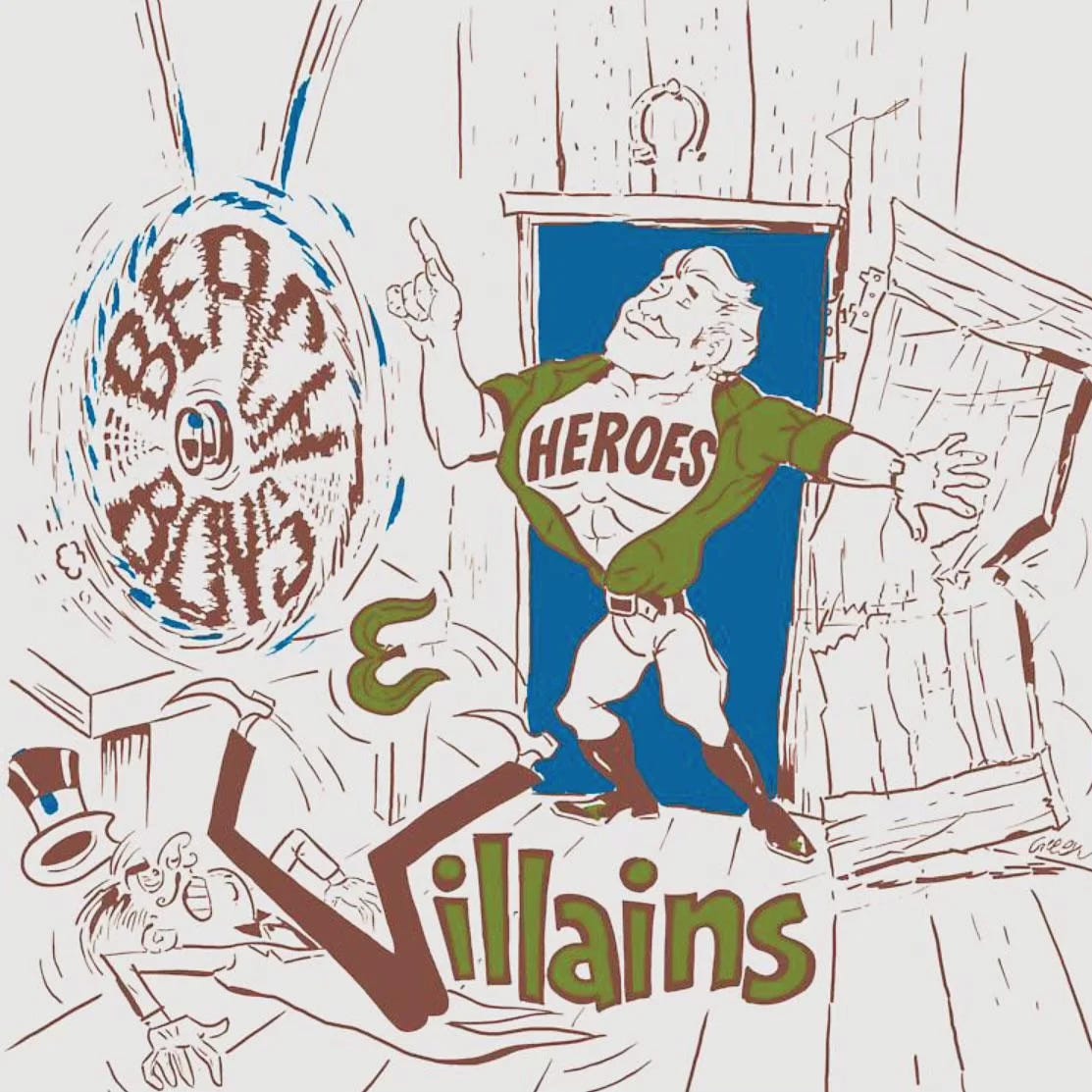
I remember getting hip to the major scale as a melody in its own right listening to Mahler. Littered throughout his symphonies are little major scale moments.
Not all melodic instances of the major scale are as grand as “Heroes and Villains” or, even grander perhaps, Handel’s Messiah (famous in English as “Joy to the world/the lord has come”). Most major scale melodies serve as launch pads for larger melodic gymnastics. A scalar sequence is a great and interesting way to tune people’s ear very quickly to a certain expectation/pattern that you can quickly and interestingly subvert in a delightful way.
A good example is the jazz standard “There Will Never Be Another You” that starts with the melody SO LA TI DO RE MI that makes the first melodic jump from MI to SO incredibly delightful to the ear.
Good melodies are always about this: surprise and delight.
One interesting melodic of “Heroes and Villains” is that the surprise and delight of that first melodic line comes not from any deviation from the pattern of following the major scale, but from the endpoint of the sequence on RE. Immediate interest from our ears. The next melodic line (“Fell in love years ago with an innocent girl/From the Spanish and Indian home/Of the heroes and villains”) is ALSO a descending major scale. It’s a nearly identical melody with two small important changes:
Although it starts on the same note, the chord setting changes from I to V, turning FA from the leading tone to MI to the flat 7 of V.
One extra note at the end of the melody: DO.
A perfect cadence back to the I.
How about that.
A simple idea executed beautifully. Perfect mechanics. A good melody is like a perpetual motion machine.